HONGYUAN Aerosol Tin Can Production Step and Detailed Inspection During Production Process Explained
HONGYUAN Aerosol Tin Can Production Step and Detailed Inspection During Production Process Explained
The production process for aerosol tin cans (also known as aerosol containers) involves several key steps, from material preparation to final quality checks. Here’s a detailed breakdown of the manufacturing process:
1.Material Selection & Preparation
Tinplate: Aerosol tin cans are typically made from tinplate steel (tin-coated steel), chosen for their durability, corrosion resistance, and ability to withstand high pressure.
Coil Cutting: Large metal coils are cut into sheets or smaller blanks for shaping.
2.Can Body Formation
Blank Cutting: Sheets are cut into rectangular blanks.
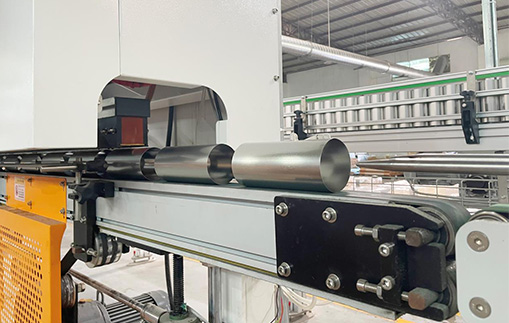
Cylinder Formation: Blanks are rolled into a cylindrical shape.
Side Seam Welding: The edges are welded (or soldered) to form a seamless cylinder.
Flanging: The top and bottom edges are flanged to prepare for end attachment.
3.Can End (Top & Bottom) Manufacturing
Stamping: Ends are stamped from metal sheets with pre-formed curls for sealing.
4. Internal Coating & Drying
Lacquering: The interior is coated with an epoxy or polymer lacquer to prevent corrosion and chemical reactions with the product (e.g., propellant or contents)
Curing: The coated can is baked in an oven to harden the lacquer.
5.Printing & Decoration
Base Coating: A primer is applied for better ink adhesion.
Lithography or Digital Printing: Designs, logos, and product info are printed on the can.
Varnishing: A protective overcoat is applied for durability.
6. Assembly & Quality Checks
Leak Testing: Cans are pressurized and checked for leaks.
Dimensional Checks: Ensures uniformity in shape and size.
Final Inspection: Visual and automated checks for defects.
7. Filling & Sealing (Typically Done by the Product Manufacturer)
Product Filling: The liquid or gel product is filled into the can.
Propellant Injection: A liquefied gas (e.g., butane, propane, or nitrogen) is added under pressure.
Valve Crimping: The valve assembly is crimped onto the can, creating an airtight seal.
Pressure Testing: Filled cans are tested for proper pressure and functionality.
8. Packaging & Distribution(Typically Done by the Product Manufacturer)
Labeling (if not pre-printed): Additional labels or sleeves may be applied.
Packing: Cans are packed into cartons or pallets for shipping.
Key Considerations in Aerosol Can Production:
Pressure Resistance: Must withstand deformation pressures up to 13bar, burst pressure up to 15 bar (varies by product).
Compatibility: Lacquers must resist chemical reactions with propellants (e.g., hydrocarbons, CO₂, or compressed air).
Sustainability: Recycling and eco-friendly propellants (e.g., compressed air instead of VOCs).
This process ensures that aerosol cans are safe, durable, and ready for use in products like deodorants, paints, insecticides, air freshener, butane gas, and industrial sprays. Let me know if you'd like details on a specific step!
During production process, quality control is critical in aerosol tin can manufacturing to ensure leak-proof integrity, pressure resistance, coating uniformity, and dimensional accuracy. Below is a detailed breakdown of inspections at each stage of production for GUANGDONG HONGYUAN METAL PACKAGING CO., LTD:
1. Raw Material Inspection
1.1 Metal Coils/Sheets:
Thickness measurement (micrometer check).
Surface defects (scratches, rust, dents).
Chemical composition (spectrometer test for alloy compliance).
1.2 Lacquers & Coatings:
Viscosity and adhesion tests.
Corrosion resistance (salt spray test on sample sheets).
2. Can Body Formation Inspection- for three-piece cans (welded side seaming):
Weld Integrity: Visual inspection for cracks or weak spots.
Spark Testing (high-voltage test to detect pinholes).
Dimensional Checks: Diameter, height, and flange width (using calipers/go-no-go gauges).
Roundness (ovality check with a mandrel test).
3. Internal & External Coating Inspection
3.1Lacquer Coverage:
Eddy Current Testing (measures coating thickness).
Pinhole Detection (electrolytic test—if current flows, coating is defective).
3.2 Curing Check:
MEK (Methyl Ethyl Ketone) Rub Test (checks curing hardness).
Adhesion Test (cross-hatch tape peel test).
4. Can End Inspection
Diameter, curl height, and sealing surface smoothness.
Leak Test (pressurized air bubble test in water).
5. Printing & Decoration Inspection
Color Accuracy: Spectrophotometer comparison to Pantone standards and customers' samples.
Print Adhesion: Tape peel test.
Scratch Resistance: Abrasion test (using a Taber abrasion tester).
6.Final Can Assembly Inspection
6.1 Leak Testing:
Air Testing Inspection: vacuum decay test (checks for pressure loss).
Helium Leak Detection (high-sensitivity method for micro-leaks).
Water Testing Inspection: submerged cans into water with corrosive liquids checked for bubbles
6.2 Pressure Resistance:
Hydraulic burst test (checks can withstand 2x rated pressure).
Creep Test (long-term pressure hold).
6.3 Dimensional Final Check:
Can height, diameter, flange alignment.
7. Post-Filling Inspection (Conducted by Filler)
Weight Check: Ensures correct propellant and product fill levels.
Spray Pattern Test: Checks nozzle functionality.
Final Leak Test:
Hot Water Bath Test (submerged cans checked for bubbles).
X-ray Inspection (for foreign particles or fill level errors).
Automated Inspection Systems in Modern Factories
Vision Systems (AI-based defect detection).
Laser Micrometers (for precise dimensional checks).
Inline Pressure Sensors (real-time leak detection).
Conclusion
Aerosol can manufacturers implement multi-stage inspections to ensure safety, functionality, and compliance with industry standards (e.g., DOT, ISO 9001, ASTM). Advanced factories use automated optical inspection (AOI) and AI-driven defect detection to minimize human error.
Attending CIE 2025 (CAN INDUSTRY EXHIBITION)
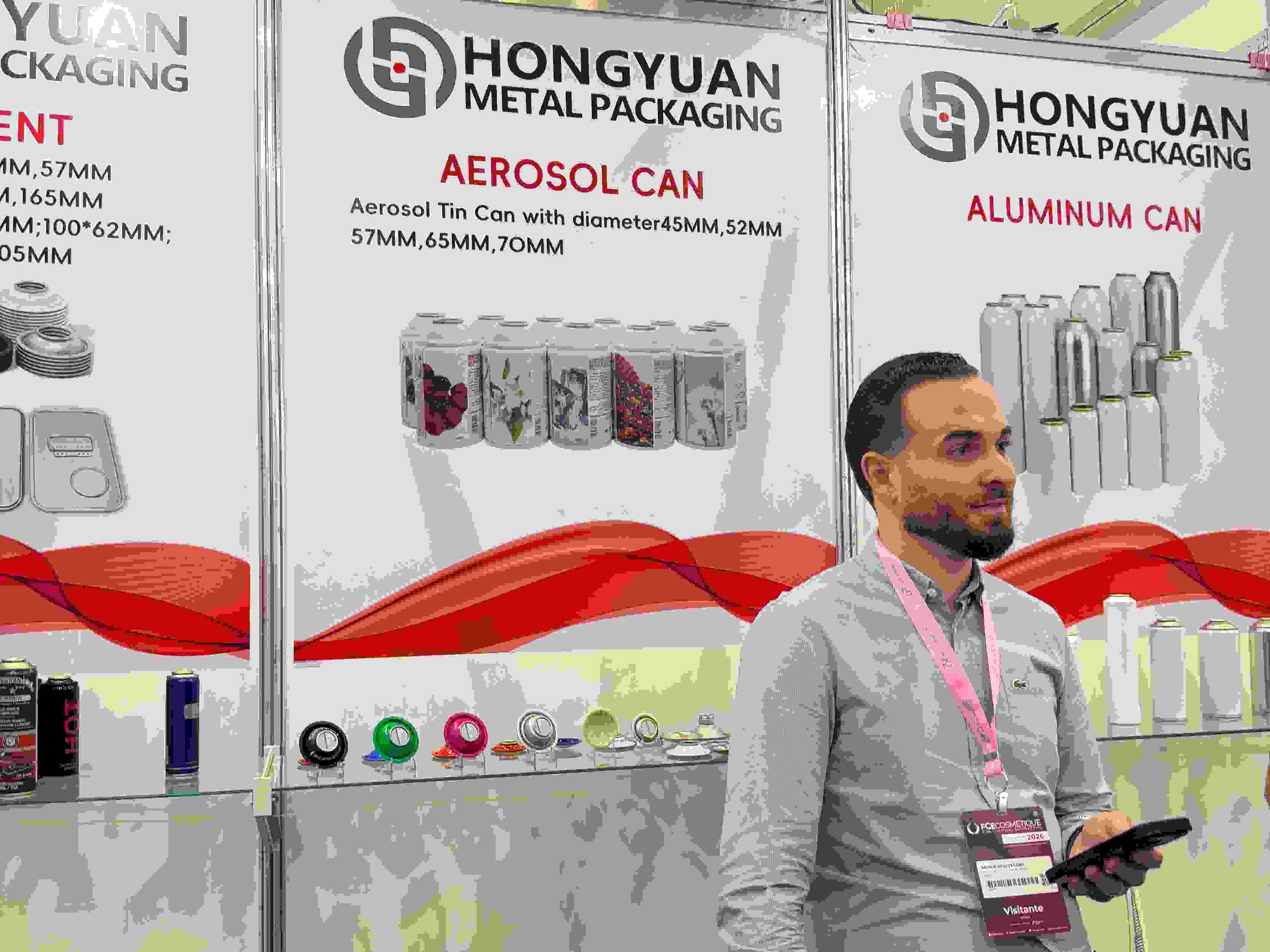
Hongyuan Metal Packaging Shines at Paris Packaging Week 2026
Related Article